Product Category

High Tonnage Cylinders

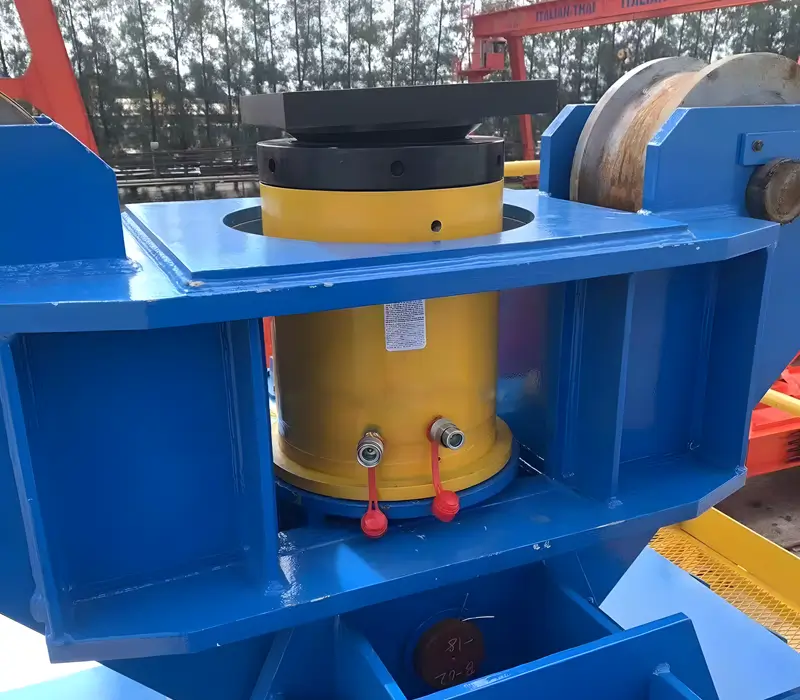
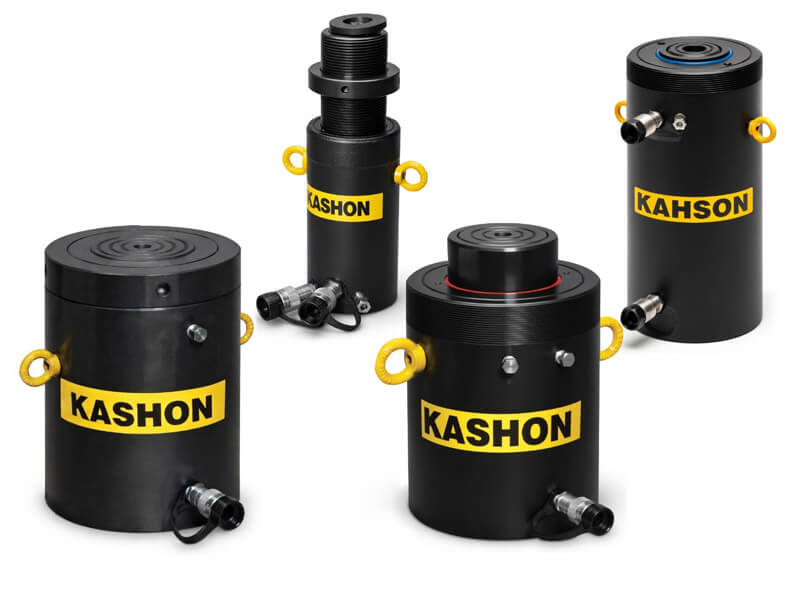
Kashon high-pressure, high-tonnage cylinders are rugged and durable for multi-point synchronous lifting, weighing, and positioning. Rated 10,000 psi (700 bar) with capacities up to 1000 tons, compliant for safe, reliable work.

Nitrocarburized wear/corrosion-resistant finish; low-wear high-pressure seals; replaceable composite bearings for side-load support; strokes to 300 mm with end-of-stroke overflow and red-band warning; single-acting load-return and double-acting options.

ISO 9001
TÜV Certified
High Tonnage Cylinders
Browse All Models

PRODUCT
LINEUP

3 Products Available
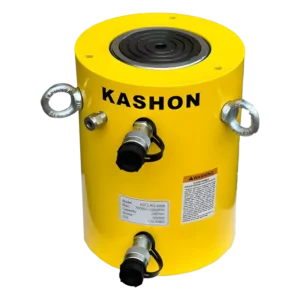
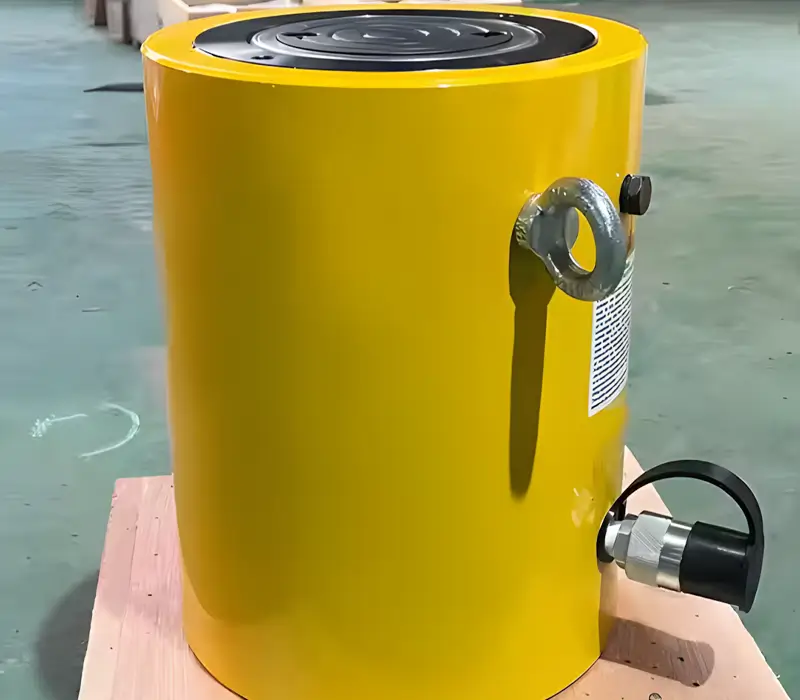
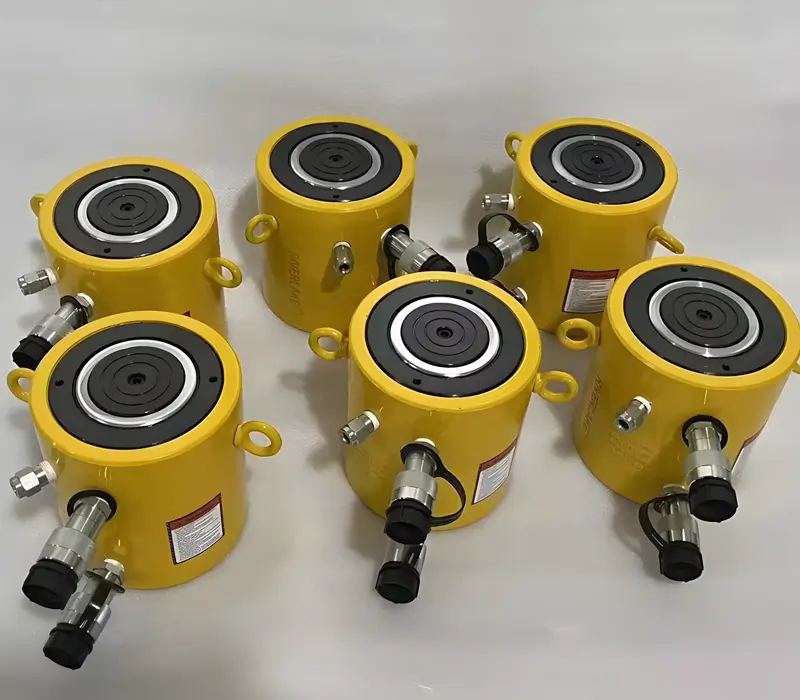
CLRG Series, Double-acting High Tonnage Hydraulic Cylinder
CLRG

CLRG Series, Double-acting High Tonnage Hydraulic Cylinder

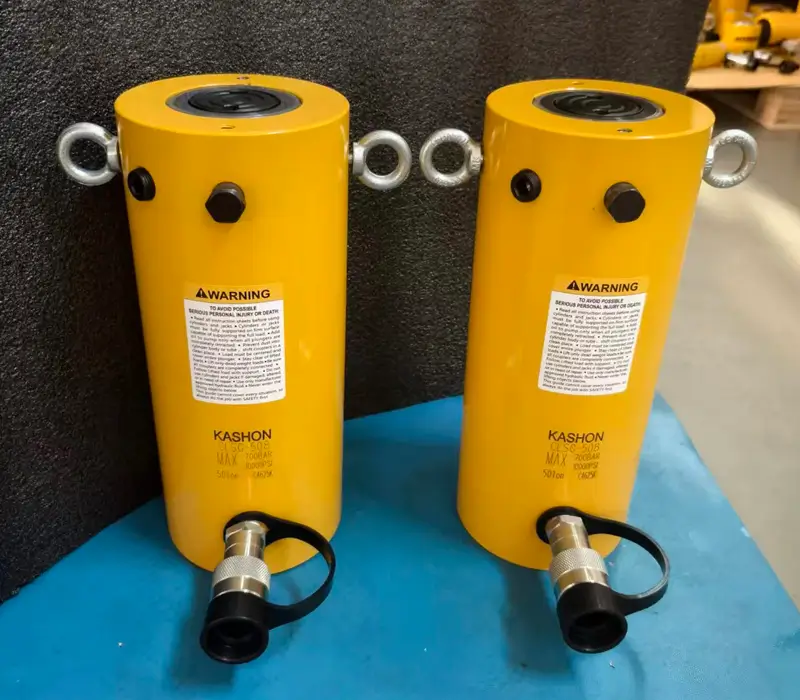
Available in numerous sizes, the Kashon CLRG series is a versatile, large-tonnage hydraulic jack. With a capacity of 50 to 1000 tons, its double-acting design ensures rapid lifting and lowering, while a safety valve provides over-pressure protection. We can outfit your specific tonnage and clearance needs with a single cylinder or a complete lifting system.

  • Capacity: 555
  • Stroke: 50-300mm
  • Pressure: 70Mpa
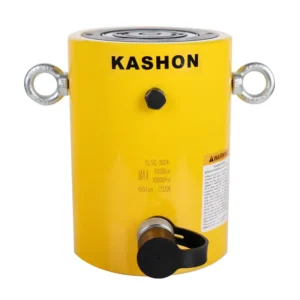
CLSG Series, Single-Acting High Tonnage Cylinder
CLSG

CLSG Series, Single-Acting High Tonnage Cylinder

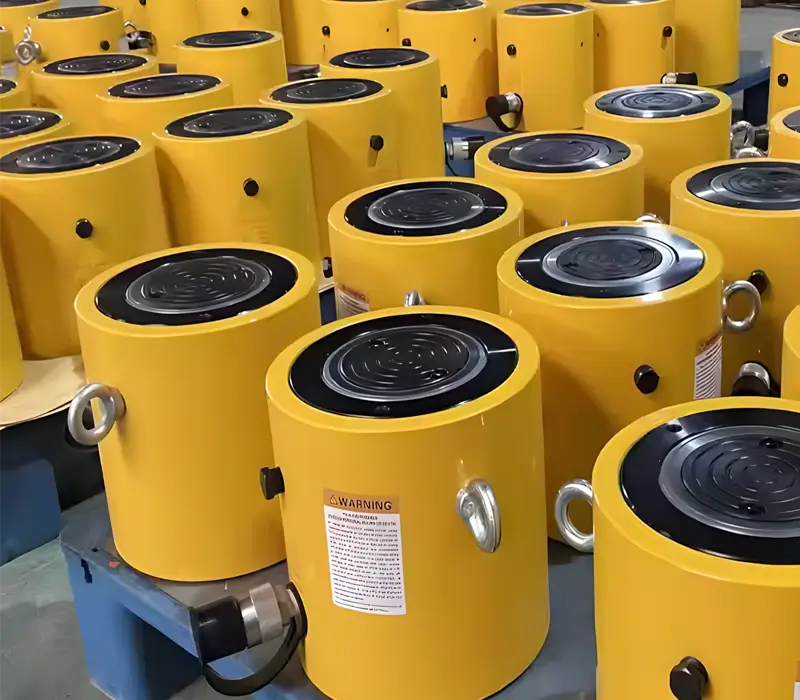
The CLSG-Series single-acting high tonnage Cylinderfor heavy-duty use, high-tonnage performance for construction, civil engineering, and maintenance applications. Every model is equipped with a standard integral tilt saddle to reduce the risk of side-loading and features an over-stroke restrictor port for enhanced durability.

  • Capacity: 555
  • Stroke: 50-300mm
  • Pressure: 70Mpa
Technical Overview

HOW DOES IT WORK?

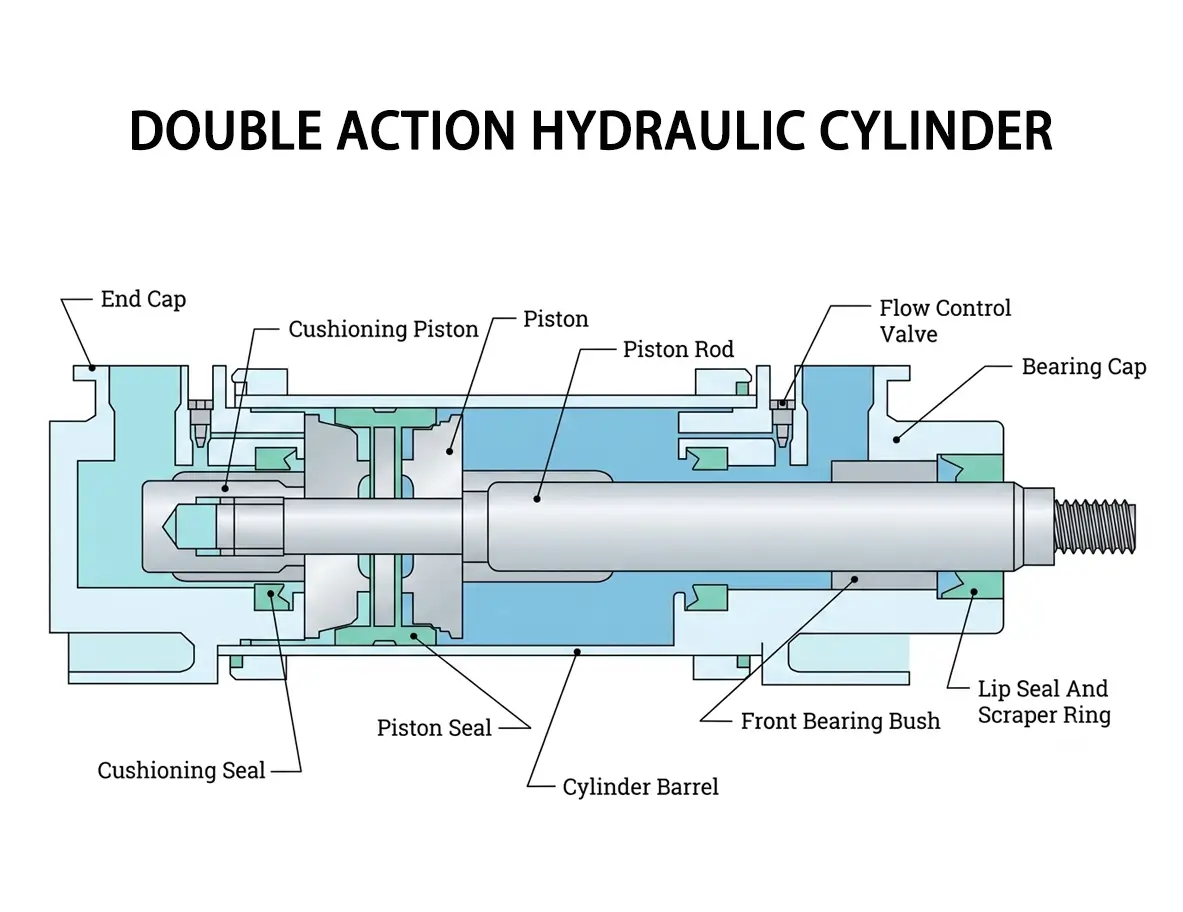
Working principle diagram
Principle Explained

How Does High‑tonnage cylinders Work?

High‑tonnage cylinders convert hydraulic pressure into linear force (F = P × A). A pump feeds oil to the cap end for extension; reversing flow powers retraction (double‑acting) or the load returns the rod (single‑acting). In multi‑point lifts, manifolds and sensors balance pressure and position to prevent frame twist.

Durability and safety come from details: low‑wear high‑pressure seal stacks with anti‑extrusion rings, replaceable composite guide bearings to resist side load, and hardened or nitrocarburized surfaces. Favor force by area (larger bore or more cylinders) over extreme pressure to reduce heat and seal stress. Verify rod buckling across the full stroke and use proper load holding—mechanical lock‑nuts for long static holds, or pilot‑operated checks/counterbalance valves for hydraulic holding.

Why Choose This Series

CORE ADVANTAGES

Tailored Engineering

CAN'T FIND THE PERFECT MATCH?
GET YOUR CUSTOM SOLUTION

Our engineering team specializes in designing bespoke hydraulic solutions tailored to your exact application requirements -- from unique tonnage ratings to specialized environmental conditions.

  • Custom tonnage, stroke & bore specifications
  • Special material & surface treatment options
  • Application-specific pressure ratings
  • Full technical drawings & documentation
  • ISO 9001 quality assurance throughout
Custom Solution
Support

COMMON QUESTIONS

Find answers to the most frequently asked questions about this product series.

Rated tonnage is the maximum force a cylinder can deliver. Long-term tonnage is the force range within which the cylinder can run stably for extended periods without accelerated wear, loss of sealing performance, or higher failure probability.

Not necessarily. Higher pressure increases seal load, heat, leakage risk, and maintenance. When safety and uptime matter, it’s usually better to increase effective area (larger bore or multiple cylinders) than to push system pressure to extremes.

  • Insufficient piston-rod stability (deflection/buckling).
  • Accelerated wear of guide elements and bearings.
  • Reduced seal life, stick–slip, and sensitivity to misalignment.
  • Side-load induced scoring. These issues often appear after some service time, not immediately. Prevent them with correct rod diameter-to-stroke ratio, proper guidance and sealing, and careful installation and synchronization.

No. Oversizing the rod increases friction and seal load, reduces retract force, and adds moving mass. Choose a rod diameter that matches stroke, mounting, expected side loads, and required speeds, verified by stability and strength checks.

Generally not recommended. High-tonnage applications stress rod stability, guidance, and sealing beyond “standard” assumptions. A custom or semi-custom design aligned to your load spectrum, environment, mounting space, and control needs will be safer and more economical over the life cycle.

  • Single-acting (load return), e.g., HCG series: simpler structure and higher inherent reliability. Extension is hydraulic; retraction relies on the load or an external force. Best when structural reliability is the priority and return speed/position control is not critical. For long-term mechanical load holding under load, use lock-nut single-acting models (e.g., HCL series).
  • Double-acting, e.g., HCR series: both extension and retraction are hydraulically powered, providing controlled speeds and position on return. At very high loads, this design demands tighter tolerances, stronger sealing, and careful stability management. If you need both bi-directional control and mechanical locking, choose double-acting lock-nut models (e.g., HCRL series).

Still Have Questions?

Our technical team is ready to help with any product inquiries.